
When we started Lio, there was an easier way to do things.
Find a supplier. Send a specification. Approve a sample. Order a few thousand flavour cores. Done.
We chose not to.
Instead, we built our own production for Lio flavour cores here in the Netherlands.
It takes more work, and outsourcing would probably be easier. But there was one thing we didn't want to outsource:
For us, that is ultimately about safety.
The flavour core is the important part
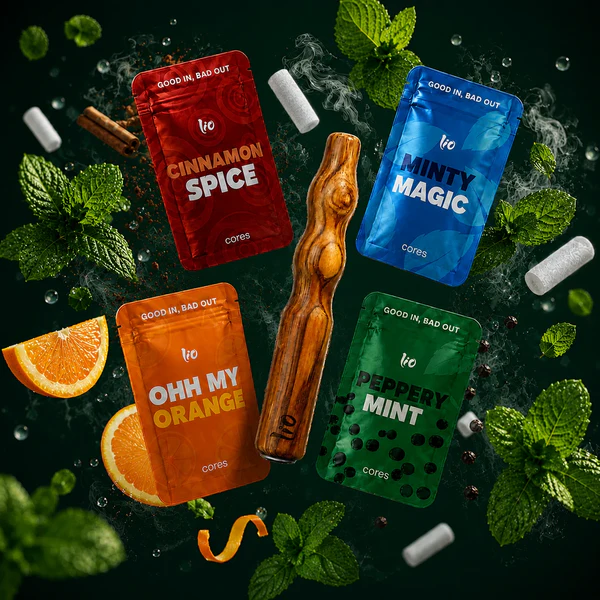
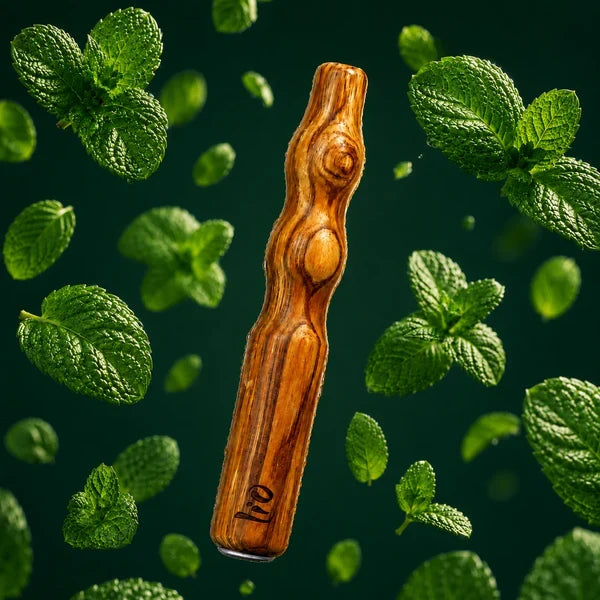
The Lio device gets most of the attention. The wood. The mouthpiece. The airflow. The way it feels in your hand.
But the flavour doesn't come from the device itself.
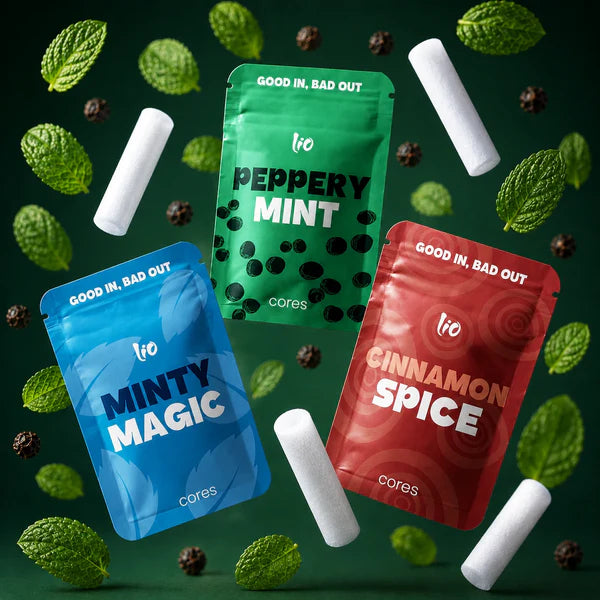
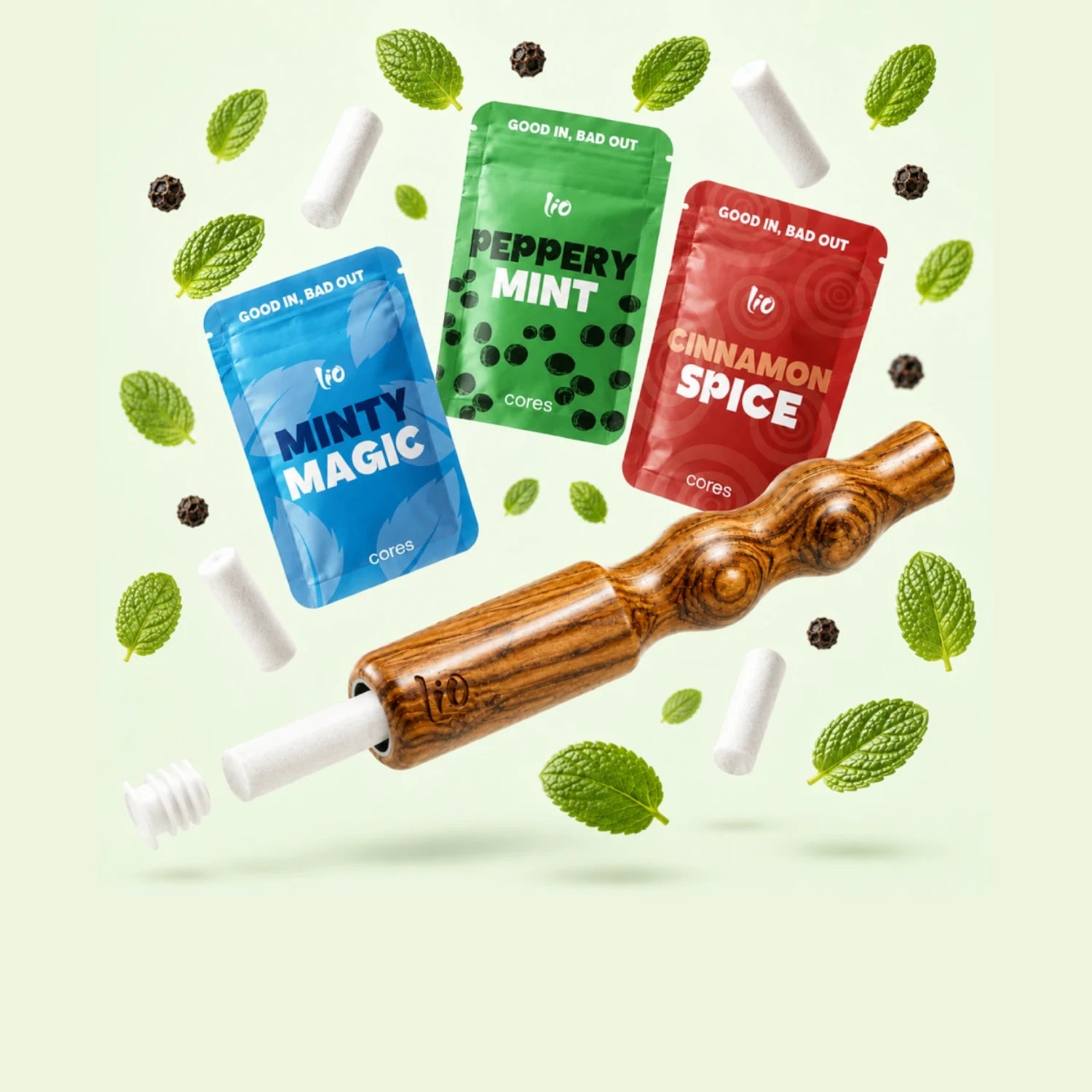
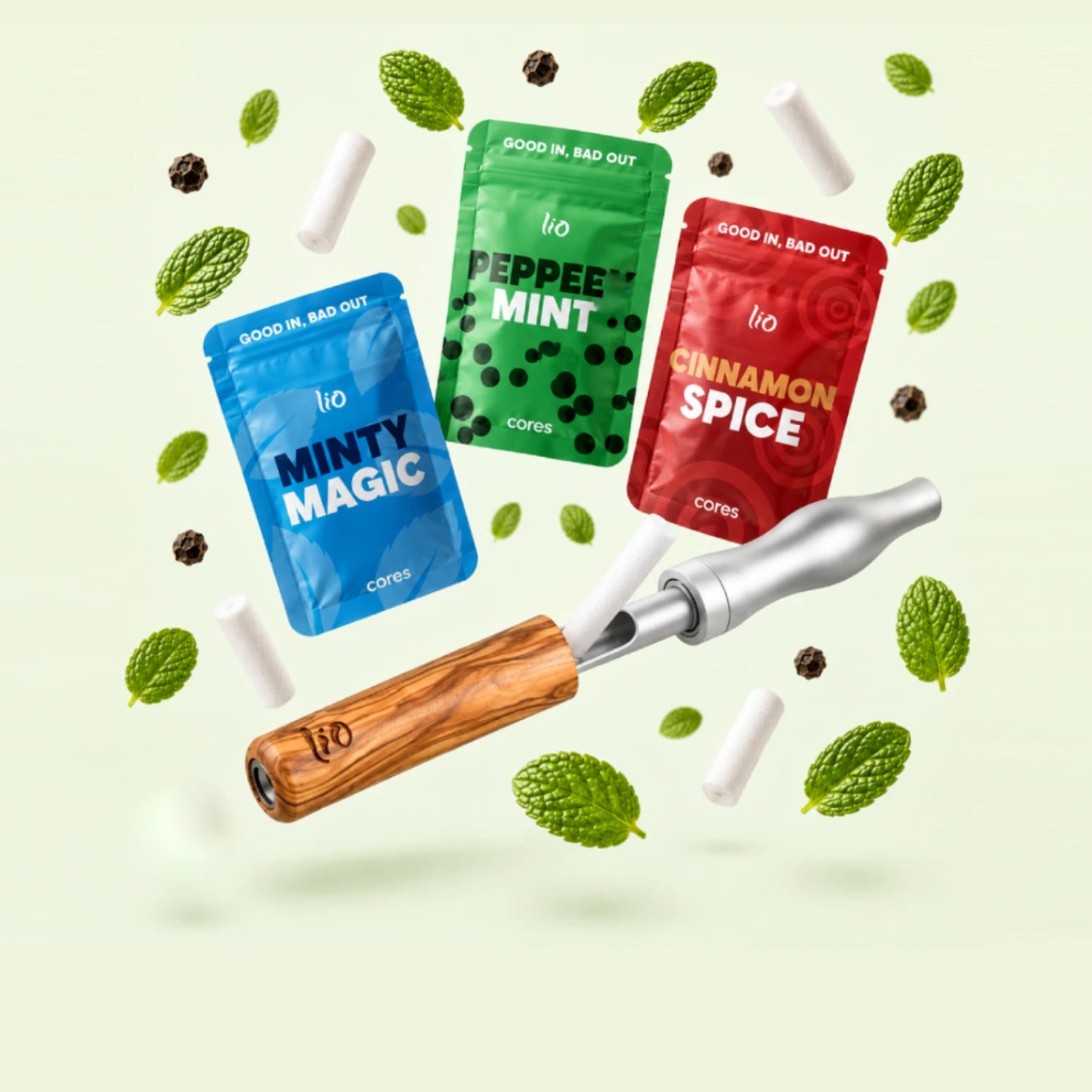
When you use Lio, air passes through the flavour core. That's where the aromatic materials are. That's where the flavour comes from.
So if there was one part of the product we wanted to understand and control as closely as possible, it was the core.
"Our supplier says it's fine" wasn't enough for us.
We wanted to know ourselves.
We make the cores ourselves
Lio flavour cores are produced by our own operation in the Netherlands.
Not just designed here. Not simply packed here. We actually produce them.
That means our team is directly involved in the important parts of the process:
- Materials — we decide what goes into the cores.
- Filling — we control how the aromatic materials are applied.
- Assembly — the cores are put together under our own process.
- Batch control — we can trace what was produced and when.
- Quality control — we check what leaves production.
- Packing — finished cores stay within our process until they're ready for customers.
The biggest advantage is simple: visibility.
We know what's happening.
And if something isn't right, we can do something about it immediately.
If something needs changing, we walk into production
This is one of the things I value most about producing the cores ourselves.
If a flavour needs adjusting, the people developing it can speak directly with the people producing it.
If something looks unusual in a batch, we investigate it ourselves.
If we find a better material, we can test it.
If customers repeatedly mention the same small detail, that feedback can reach production quickly.
We don't need to start an email chain involving an agent, a factory and another supplier.
That might not sound very exciting.
When you run a physical product company, it is.
But we don't mark our own homework
Producing the cores ourselves gives us control.
It doesn't mean we expect customers to simply take our word for everything.
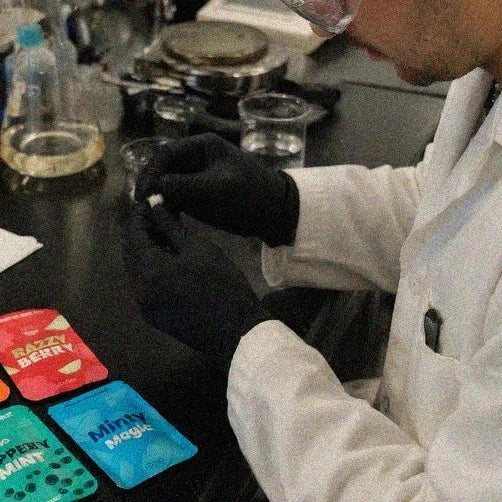
That's why finished Lio cores are also independently tested by a major Dutch laboratory.
There's an important difference between:
"We made it, so we say it's good."
and
"We made it, we control the process, and then an independent laboratory checks it too."
We prefer the second one.
Our botanical materials are selected according to the standards we've set for Lio, including IFRA-compliant aromatic ingredients.
Our approach is straightforward: control the process internally. Verify the finished product externally.
Why we don't outsource the cores
There are cheaper and easier ways to make a refill.
You can choose an existing formulation from a manufacturer, put your branding on it and start selling.
And that can produce perfectly good products.
But it also means part of your knowledge, production process and quality control sits somewhere else.
For us, the flavour core was simply too important for that.
It's the part the air travels through before it reaches you.
We wanted the materials, production process, batch information and quality control close enough that we could take responsibility for them ourselves.
This isn't about one country being better than another
This is not a "China bad, Netherlands good" story.
China manufactures some of the world's most advanced consumer products. A product isn't automatically good or bad because of the country where it was made.
The more useful questions are:
- Who actually makes the consumable?
- How involved is the brand?
- Can the materials and batches be traced?
- Who controls the production process?
- What happens if something goes wrong?
- Is the finished product independently tested?
Those questions tell you much more than a flag on the box.
For Lio, we wanted the answer to be simple: we make our own cores, we control our own process, and we independently test the finished product.
Nearly 200,000 customers makes this more important
When Lio was small, keeping production close felt natural.
Today, we're approaching 200,000 customers across seven countries.
You might think that's the point where outsourcing becomes more attractive.
For us, the opposite happened.
As Lio grew, our own production became more valuable.
With a large customer base, consistency matters enormously. A tiny production issue multiplied across thousands of customers can quickly stop being tiny.
So we care more than ever about traceability, repeatability, quality control and being able to act quickly when something needs attention.
Scale made us more serious about production, not less.
We're still close to the product
Lio started as a Dutch family business, and we're still family-run today.
For us, that means something practical.
The people speaking with customers can talk to the people developing flavours. The people developing flavours can talk directly to production.
Feedback doesn't have to travel through six departments and three outside companies before someone can act on it.
And if something goes wrong, there isn't another manufacturer for us to point at.
It's ours.
That accountability is something we want to keep.
Made by us. Tested beyond us.
That's probably the simplest way to describe our approach.
We make the flavour cores ourselves. Then we have them independently tested.
One gives us control.
The other gives us external verification.
Together, they allow us to keep safety close to the way the product is actually made, rather than treating it as something you think about only after production is finished.
What does this mean for you?
Hopefully, very little.
You shouldn't have to think about production equipment, batch numbers or quality-control processes every time you use your Lio.
That's our job.
Your experience should be much simpler:
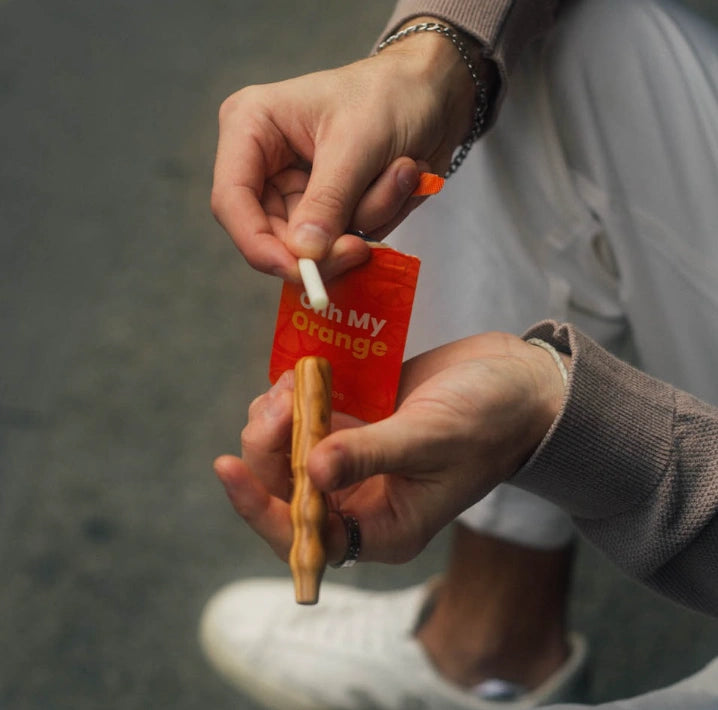
Open a core. Put it in. Use your Lio. Enjoy the flavour.
The complicated part should happen before the product ever reaches you.
Your Lio order is packed by our team and shipped from Amsterdam.
The Starter Pack costs €49 and includes the device and your first supply of flavour cores. There is no required subscription, and our 30-day money-back guarantee covers the device too.
Nearly 200,000 customers later, we still make our own cores.
And we intend to keep it that way.
Quick answers
Where are Lio flavour cores made?
In the Netherlands. Lio produces its flavour cores through its own production operation rather than buying finished cores from a third-party manufacturer.
Does Lio make its own flavour cores?
Yes. We control the production process ourselves, including materials, filling, assembly, batch control, quality control and packing.
Why does Lio produce its own cores?
Control and safety. Producing the cores ourselves gives us direct visibility over the materials, production process and quality controls.
Are Lio flavour cores independently tested?
Yes. Finished Lio cores are independently tested by a major Dutch laboratory in addition to our own internal production controls.
Does that mean Lio can guarantee zero risk?
No responsible product company should promise that. Our approach is to control as much of the production process as possible and use independent testing as an additional layer of verification.
Are Lio devices made in the Netherlands?
This article refers specifically to Lio's flavour cores, which are produced by Lio's own operation in the Netherlands.
Is Lio a family business?
Yes. Lio started as a Dutch family business and remains family-run today.
How many customers does Lio have?
Lio is approaching 200,000 customers across seven countries.
We could outsource the cores tomorrow.
It would make some parts of running Lio easier.
But every time I walk into production, see what's being made and know we can change something immediately if we're not happy, I'm reminded why we don't.
It's our product. So we want the important parts of it in our hands.
Made by us. Tested beyond us.
— Mees
Lio is a nicotine-free aromatherapy diffuser. It is not a vape, medical device, smoking-cessation aid or therapeutic treatment. Lio does not claim that use is risk-free and makes no medical or health claims. Adults only.

Leave a comment
This site is protected by hCaptcha and the hCaptcha Privacy Policy and Terms of Service apply.